
The Field Looked Fine
We hear it often.

“The field looks fine.”
And visually, it might.
Color consistent.
Fibers upright.
No visible seam separation.
No obvious low spots.
But visual assessment is not performance assessment.
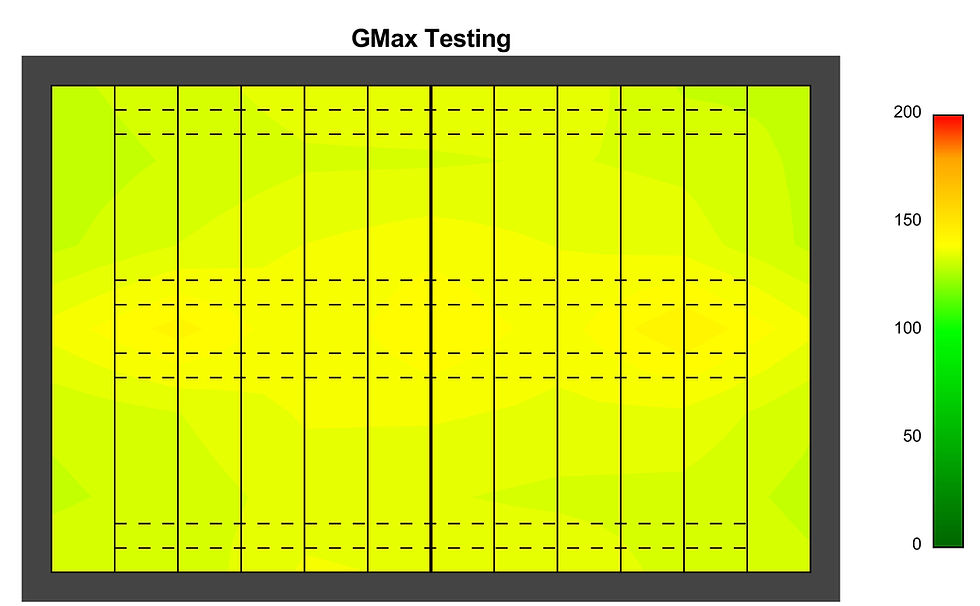
Across measured synthetic turf assets, TurfOptiX routinely identifies:
Infill depth variation of 4–8mm across zones
Hardness differences between high-traffic corridors and perimeter area
Localized compaction not visible to the eye
Early seam stress before visible separation
Drainage inconsistencies masked during dry conditions
None of these conditions are obvious during a walk-through.
Yet each affects performance consistency, player interaction, and long-term lifecycle.
The Illusion of Uniformity

Synthetic turf is designed to look uniform.
Performance rarely remains uniform without disciplined intervention.
A field can look consistent and perform inconsistently.
Performance drift happens gradually.
Failure feels sudden.
What appears to be a “new problem” in-season often began as unmeasured deviation months earlier.
Measurement Changes the Conversation

TurfOptiX operates from a measurable standard.
If it isn’t quantified, it isn’t confirmed.
Field Intelligence Surveys routinely reveal performance variability on surfaces that pass visual inspection.
The purpose of measurement is not to find fault.
It is to prevent escalation.
The Real Risk

The risk is not that a field “looks bad.”
The risk is believing that appearance equals performance.
Visual confirmation provides comfort.
Data provides certainty.
Synthetic turf is a capital asset.
Capital assets require measurable standards.
Notes from the Field is a bi-weekly briefing from TurfOptiX sharing real-world surface conditions, quantified risk variables, and disciplined asset management practices.


Comments